Plastic Pallet Welding Machines: Transforming Industrial Plastic Pallet Production
In the modern industrial landscape, plastic pallets have become indispensable for logistics, warehousing, and manufacturing. As demand for durable, hygienic, and heavy-duty pallets increases, the need for advanced manufacturing equipment has grown significantly. Plastic pallet welding machines are at the forefront of this revolution, providing manufacturers with reliable, efficient, and high-quality solutions for assembling plastic pallets.
Why Plastic Pallets Are Essential
Plastic pallets have several advantages over traditional wooden pallets. They are:
- Durable: Resistant to weather, chemicals, and repeated handling.
- Hygienic: Easy to clean and ideal for food, pharmaceutical, and medical industries.
- Consistent in size and shape: Ensures smooth operation with automated handling equipment.
- Recyclable: Environmentally friendly and supports sustainable manufacturing practices.
Plastic Pallet Production Challenges
While plastic pallets offer significant benefits, manufacturing them efficiently and consistently poses challenges. Traditional assembly methods, such as manual welding or adhesive bonding, often result in:
- Inconsistent joint strength
- Longer production cycles
- Higher labor costs
- Difficulty in meeting hygiene standards
To address these challenges, automated plastic pallet welding machines are used. They offer precise control, repeatable quality, and faster production rates.
Hot Plate vs. Ultrasonic Welding for Plastic Pallets
Plastic pallet welding typically employs two major methods: hot plate welding and ultrasonic welding. Each method has its unique advantages depending on pallet material, thickness, and application requirements.
Hot Plate Welding
Hot plate welding involves heating the contact surfaces of plastic components until they reach the softening point, then pressing them together to form a solid joint. Key advantages include:
- Capability to weld large and thick components, ideal for heavy-duty pallets.
- Uniform heating ensures high joint strength.
- Adaptable for different pallet sizes and designs.
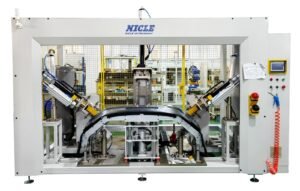
One of the industry-leading solutions is the Dizo Sonics Plastic Pallet Hot Plate Welding Machine, designed for high-volume production with fast cycle times and consistent quality.
Ultrasonic Welding
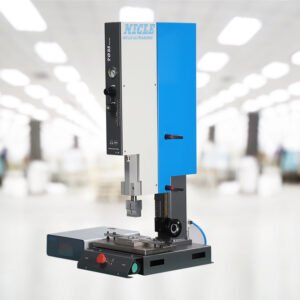
Ultrasonic welding uses high-frequency mechanical vibrations to create heat at the interface of plastic components. Advantages include:
- Rapid cycle times suitable for mass production.
- Clean joints without adhesives or solvents.
- Low energy consumption and minimal thermal distortion.
Ultrasonic welding is often preferred for smaller pallet components or applications where precision and hygiene are critical. Dizo Sonics offers a range of ultrasonic welding solutions tailored for pallet assembly, ensuring high repeatability and industrial-grade reliability.
Applications Across Industries
Plastic pallets welded with advanced machinery are widely used in:
- Automotive: Transporting parts and assemblies without damage.
- Food & Beverage: Hygiene-compliant pallets suitable for refrigerated or wet environments.
- Pharmaceutical: Sterile handling and cleanroom storage.
- Logistics & Warehousing: Heavy-duty storage and automated handling systems.
Efficient plastic pallet welding machines enable manufacturers to meet strict quality standards while reducing labor costs and improving throughput.
Why Choose Dizo Sonics Plastic Pallet Welding Machines
Dizo Sonics has over 15 years of experience in ultrasonic and hot plate welding technology. Their plastic pallet welding machines provide:
- Customizable solutions for different pallet sizes and materials
- High-precision temperature and pressure control for consistent joints
- Fast production cycles to maximize output
- Reliable after-sales support and training for operators
Manufacturers looking to upgrade their pallet production can learn more about these solutions here: Dizo Sonics Plastic Pallet Hot Plate Welding Machine.
Conclusion of Part 1
Plastic pallet welding machines play a critical role in modern pallet production. By leveraging hot plate and ultrasonic welding technology, manufacturers can improve efficiency, reduce costs, and ensure high-quality, durable pallets for industrial use. Dizo Sonics provides reliable and customizable solutions designed to meet these demands, supporting a wide range of applications across automotive, logistics, food, and pharmaceutical industries.
Plastic Pallet Types and Welding Considerations
1. Hygiene Plastic Pallets
Hygiene plastic pallets are designed for industries where cleanliness is paramount, such as food, beverage, pharmaceutical, and medical sectors. They are typically made from high-density polyethylene (HDPE) or polypropylene (PP) with smooth surfaces to prevent bacterial accumulation. Key features include:
- Easy-to-clean smooth top deck
- Resistance to moisture, acids, and chemicals
- Lightweight yet sturdy construction
- Compliance with international hygiene standards
When using a plastic pallet welding machine for hygiene pallets, precision is critical. Excessive heat or vibration may damage the smooth surface. Hot plate welding is often preferred for large pallets to ensure uniform bonding, while ultrasonic welding is ideal for small or intricate components. For example, Dizo Sonics provides specialized plastic pallet hot plate welding machines with adjustable temperature controls to maintain hygienic surfaces.
2. Heavy-Duty Plastic Pallets
Heavy-duty plastic pallets are designed to handle large loads, typically exceeding 1000 kg. These pallets are commonly used in industrial and logistics operations where mechanical strength is essential. Materials often include reinforced PP or HDPE with steel inserts or structural ribs. Key characteristics:
- High load capacity
- Reinforced structure for forklifts and automated handling
- Durability in extreme temperatures
Welding heavy-duty pallets requires equipment that can provide sufficient heat and pressure. Hot plate welding machines are particularly suitable, as they can handle thick sections and produce strong, consistent joints. Manufacturers benefit from using machines such as the Dizo Sonics hot plate pallet welding system, which allows customization for different pallet designs while ensuring safety and efficiency.
3. Three Runners Pallets
Three runners pallets have three longitudinal beams (runners) that support the deck, offering a balance between weight, stability, and cost. They are commonly used in warehouses and transport operations. Characteristics include:
- Reduced material usage compared to four-way pallets
- Lightweight yet strong enough for medium loads
- Good compatibility with forklifts and pallet jacks
When welding three runners pallets, careful alignment is essential to ensure the runners are properly bonded to the top and bottom deck. Both hot plate and ultrasonic welding can be used, depending on material thickness and production volume. Dizo Sonics plastic pallet welding machines provide adjustable fixtures to accommodate different runner configurations, ensuring consistent quality across batches.
4. Double-Face Pallets
Double-face pallets feature decks on both the top and bottom, providing enhanced strength and stability. They are ideal for repeated use, heavy loads, and automated warehouse systems. Key properties include:
- Top and bottom decks for uniform load distribution
- High impact resistance and durability
- Compatibility with automated handling systems
Welding double-face pallets is more complex due to the need to bond both decks to the runners or core. Precision in pressure, alignment, and heat application is critical. Hot plate welding is generally preferred for heavy double-face pallets, while ultrasonic welding is suitable for lighter pallets or those with complex deck geometries. The Dizo Sonics hot plate welding machines offer advanced temperature and pressure controls to handle double-face pallets efficiently.
Considerations When Using Plastic Pallet Welding Machines
To achieve optimal results across different pallet types, manufacturers should consider:
- Material compatibility: HDPE, PP, or composite pallets require specific welding parameters.
- Thickness of components: Hot plate welding handles thick sections better; ultrasonic welding is suitable for thinner, detailed parts.
- Alignment and fixture: Proper alignment prevents warping or weak joints.
- Cycle time and production volume: High-volume operations benefit from automated hot plate or multi-head ultrasonic welding systems.
- Hygiene requirements: Smooth surfaces and clean welds are critical for food and pharmaceutical applications.
By using advanced plastic pallet welding machines like the Dizo Sonics hot plate welding machine, manufacturers can optimize production, maintain consistent quality, and reduce labor costs across all pallet types.
Conclusion of Part 2
Understanding the differences between hygiene, heavy-duty, three runners, and double-face pallets is essential for selecting the right welding method. Proper use of plastic pallet welding machines ensures strong, durable joints, efficient production, and compliance with industry standards. Dizo Sonics offers flexible and reliable solutions for every pallet type, supporting manufacturers in achieving high-quality output and cost-effective production.
Maintenance, Industry Trends, and ROI of Plastic Pallet Welding Machines
Proper Maintenance for Long-Lasting Performance
To ensure consistent operation and longevity of plastic pallet welding machines, regular maintenance is crucial. Key maintenance practices include:
- Cleaning: Remove debris, dust, and plastic residues from welding surfaces and fixtures after each production shift.
- Inspection: Check heating elements, ultrasonic horns, and fixtures for wear and tear to avoid defective joints.
- Calibration: Periodically calibrate temperature, pressure, and ultrasonic settings to maintain repeatable weld quality.
- Lubrication: Ensure moving parts are properly lubricated to reduce mechanical stress and prevent downtime.
- Software updates: Advanced welding machines, such as those by Dizo Sonics, often include digital control systems that require regular firmware or software updates for optimal performance.
By following these maintenance practices, manufacturers can reduce machine downtime, improve weld consistency, and extend the equipment’s lifespan, ultimately lowering overall production costs.
Industry Trends and Innovations
The plastic pallet industry is evolving rapidly due to automation, sustainability, and advanced material technologies. Key trends include:
- Automation & Robotics: Integrating robotic arms and automated pallet assembly lines to enhance production speed and reduce labor dependency.
- Smart Sensors & IoT: Welding machines equipped with sensors monitor temperature, pressure, and vibration in real-time to prevent defects.
- Sustainable Materials: Increasing use of recycled plastics and composite materials for eco-friendly pallet production.
- Customizable Pallet Designs: Demand for pallets optimized for specific industries or transport systems, requiring flexible welding solutions.
- High-Efficiency Welding: Multi-head hot plate welding and advanced ultrasonic systems improve throughput while maintaining quality.
Dizo Sonics continuously adapts to these trends by offering advanced plastic pallet welding machines that integrate automation, precision controls, and modular designs suitable for a variety of industrial requirements.
ROI and Production Efficiency
Investing in high-quality plastic pallet welding machines provides significant return on investment (ROI) due to:
- Reduced labor costs: Automated welding minimizes manual intervention.
- Faster production cycles: Advanced hot plate and ultrasonic systems shorten welding time per pallet.
- Consistent product quality: Reduces rejection rates and material waste.
- Energy efficiency: Modern machines consume less power compared to traditional methods.
- Scalability: Machines like Dizo Sonics’ hot plate welding systems can handle varying pallet sizes and production volumes, supporting long-term growth.
Manufacturers often find that upgrading to advanced welding machines pays off within months due to increased output and reduced operational costs.
Tips for Maximizing Machine Efficiency
- Train operators thoroughly on machine setup, safety, and troubleshooting.
- Schedule preventive maintenance regularly to avoid unexpected downtime.
- Use high-quality raw materials compatible with the welding machine to ensure strong joints.
- Monitor production metrics to identify bottlenecks and optimize cycle times.
- Leverage modular machine designs to quickly adapt to new pallet designs or material types.
Conclusion and Call to Action
Plastic pallet welding machines are essential for modern industrial pallet production. They improve efficiency, ensure high-quality joints, and support diverse pallet types including hygiene, heavy-duty, three runners, and double-face designs. By implementing proper maintenance practices, adopting advanced technologies, and investing in reliable equipment, manufacturers can achieve faster production cycles, consistent product quality, and significant cost savings.
If you are looking for a trusted partner in plastic pallet production, explore the range of high-performance Dizo Sonics plastic pallet hot plate welding machines today. Upgrade your manufacturing process, enhance productivity, and ensure consistent quality across every pallet you produce.
 English
  Русский
  Español de México
  العربية
  Deutsch
  Français
  Português
  Tiếng Việt